Trade Used Batteries for New Ones in Seoul: How the Community Center Swap Works

- Many Seoul districts trade used batteries for new batteries, trash bags or toilet paper.
- Rates differ by district: Dongdaemun gives 1 toilet roll per 15 batteries (2026).
- Bring them to your 동주민센터 (community center) and ask at the front counter.
- No swap running? Drop them in the free battery box there anyway.
- Never put batteries in a trash bag: Seoul warns they start fires.
Yes. Many Seoul districts will trade your used batteries for something new at the local 동주민센터 (community service centre): new AA batteries, district trash bags (종량제 봉투) or toilet paper. Each district sets its own rate and schedule. As of 2026, Dongdaemun-gu gives one toilet roll for every 15 batteries of any size (Seoul Metropolitan Government), and Dobong-gu gives a 10 L trash bag for every 10 (Herald Economy). Milk cartons and clear plastic bottles often swap at the same counter. If your district has no swap running, the battery box at the same centre is still free, and it is the only legal way to throw batteries out.
By Steve Wagner, Founder of Shared Homies. Last updated 25 November 2026. Reading time: 6 minutes.
- Collect dead batteries in a jar or zip bag. Tape the ends of lithium and 9 V ones.
- Walk to your 동주민센터 on a weekday, 9:00–18:00. Search "주민센터" in Naver Map or Kakao Map.
- Show the counter the Korean line below and hand them over.
- No swap today? Drop them in the battery box (폐건전지 수거함) by the door. Done.
A bag of batteries and the right address. Nothing else.
- Your 동주민센터. Every 동 (neighbourhood) has one. Search "주민센터" in Naver Map or Kakao Map from home and pick the one with your 동 in its name.
- Opening hours. Weekdays, roughly 9:00 to 18:00. Closed at weekends and on public holidays.
- Batteries counted or weighed. Some districts count (15 or 10 at a time), some weigh (0.5 kg is about 20 AA). Count yours before you go.
- Cartons and bottles, if you bring them: rinsed, dried and flattened. Wet or dirty ones get refused.
- This phrase card. Show it on your phone:
| You want to ask | Show this | Say it roughly like |
|---|---|---|
| Can I swap used batteries? | 폐건전지 교환 되나요? | pye-geon-jeon-ji gyo-hwan dwe-na-yo? |
| Can I swap milk cartons? | 종이팩 교환 되나요? | jong-i-paek gyo-hwan dwe-na-yo? |
| Where is the battery box? | 폐건전지 수거함 어디 있어요? | pye-geon-jeon-ji su-geo-ham eo-di i-sseo-yo? |
| When is the swap day? | 교환하는 날이 언제예요? | gyo-hwan-ha-neun na-ri eon-je-ye-yo? |
It depends on the district, and the rates below are the ones published, not a city rule. These are the most recent official or press figures we could verify:
| District | What you bring | What you get | Source date |
|---|---|---|---|
| Dongdaemun-gu (동대문구) | 15 batteries, any size | 1 roll of toilet paper | March 2026 |
| Dobong-gu (도봉구) | 10 batteries | One 10 L trash bag | March 2026 |
| Dobong-gu | 1 power bank / 1 old phone | One / three 10 L trash bags | March 2026 |
| Gangseo-gu (강서구) | 0.5 kg of batteries | 1 set of new AA, or two 10 L trash bags (max 4 sets or 8 bags a day) | April 2024 |
Sources: Dongdaemun, Dobong, Gangseo.
Where our houses are, we could not find a current published rate. We checked the district sites for Yongsan-gu (Haebangchon, Itaewon), Seodaemun-gu (Muak, Hongje), Mapo-gu, Gangnam-gu, Gwanak-gu and Jongno-gu in November 2026. Gangnam ran a carton and bottle swap at Cheongdam-dong in 2024 (Gangnam-gu), but that notice ended in November 2024. Not published does not mean not running: many 동주민센터 swap at the counter without posting it online. Ask once with the phrase card and you will know.
- Collect in one place. A jar by the door works; in a share house, make it one shared jar. Expected: 15–20 batteries in a few months. Pitfall: loose lithium coin cells and 9 V batteries touching each other can short. Tape their ends.
- Find your 동주민센터. Search "주민센터" in Naver Map or Kakao Map. Expected: a walk of 5–15 minutes from most Seoul homes. Pitfall: the 구청 (district office) is a different, bigger building. Go to the 동 centre.
- Go on a weekday during office hours. Expected: in and out in five minutes. Pitfall: some districts only swap on set days (Dongdaemun rotates through its centres twice a month, 14:00–17:00). Ask "교환하는 날이 언제예요?" and come back.
- Show the phrase card at the front desk. Expected: they count or weigh the batteries and hand you the item. Pitfall: a busy desk may wave you towards the box. That is fine. The box is the main goal.
- No swap? Use the box. Expected: a red or yellow 폐건전지 / 폐배터리 box near the entrance or in the car park. Pitfall: do not leave a bag on the counter or the floor. Put the batteries in the slot.
Because they start fires. Seoul's guidance is direct: batteries thrown in general waste cause pollution and a fire risk, so they must be collected and put in a battery box (Seoul Metropolitan Government). Lithium cells crushed in a garbage truck or a sorting plant can ignite. A trash bag with batteries in it is also a sorting violation under your district's rules, the same as any other wrongly sorted bag; our trash guide covers how the fines work. Batteries are almost entirely recyclable, which is why districts pay you in trash bags to bring them back.
Next: What else can I swap at the same counter? ↓Paper cartons and clear plastic bottles, in many districts.
| Item | Prep | Typical swap | Example |
|---|---|---|---|
| Paper packs (종이팩): milk, juice, soy-milk cartons | Rinse, open flat, dry | Toilet paper | Gangseo: 2 kg → 1 roll (2024) |
| Paper packs (Dobong) | Rinse, open flat, dry | Toilet paper | 1.5 kg → 1 roll (2026) |
| Large cartons or clear PET bottles (over 500 ml) | Rinse, label off, crush | Trash bags | Dongdaemun: 10 → 5 L bag, 20 → 10 L bag, 40 → 20 L bag or a toilet roll (2026) |
Sources: Gangseo, Dobong, Dongdaemun.
Clear PET bottles always need their own bag on recycling day, whether or not you swap them. The trash guide has the full sorting rules.
Next: What else is worth knowing in your first weeks? ↓- Your first 30 days in Seoul: the checklist
- How to get your ARC
- Leave the tap running: frozen pipes in Korea
- Seoul's winter gas bill, explained
Living in a Shared Homies house? Your house chat can tell you where your nearest 주민센터 is. Looking for a room? See what is open.
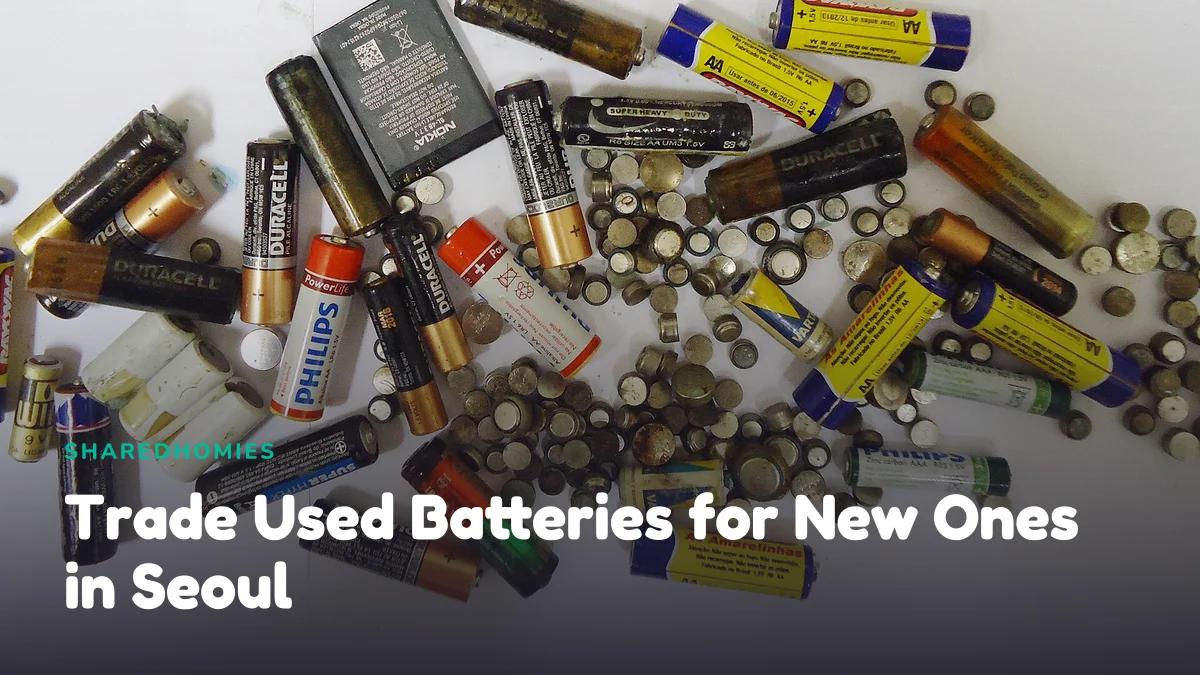
Cover photo: Mauro Cateb, CC BY-SA 3.0.

Frequently asked questions

F-4 visa holder operating co-living houses in Seoul since 2023. Writes about the practical reality of foreigner housing in Korea — what the friction actually costs, what it takes to live here long-term, and where the rental system trips up newcomers.
We reply within 24 hours · ★ 5.0 on Google Reviews
or browse the houses first →