Korea's Digital Nomad Visa (F-1-D): The 2026 Guide to the Eased Rules, Income Thresholds, and Where to Live

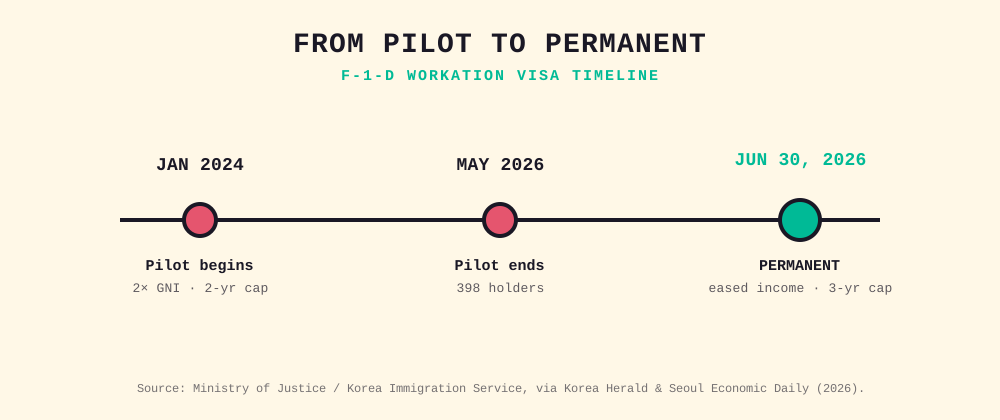
- South Korea made the F-1-D "Workation" digital nomad visa permanent on June 30, 2026.
- The income bar was eased from 2× to as low as 1× GNI per capita (~$37,000).
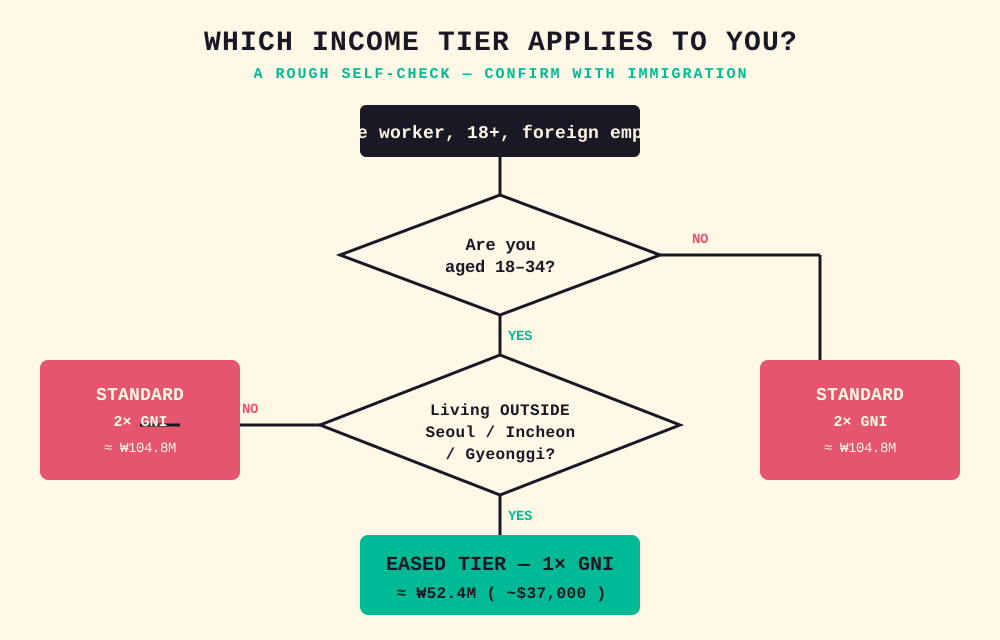
- The bar eases to between 1× and 2× GNI for under-35s **or** people outside the capital region.
- Maximum stay rose from 2 years to 3 years.
- You must work remotely for a foreign employer; local Korean employment stays banned.
- Spouses and minor children can accompany you as dependents.
- Only 398 people were on the visa as of May 2026 — the eased rules aim to change that.
South Korea made its digital nomad visa permanent on June 30, 2026, and eased who can get it. The visa — the F-1-D, officially the "Workation" visa — lets remote workers employed by foreign companies live in Korea for up to three years (raised from two). The headline change is money: the minimum-income bar is now eased within a range of 1× to 2× of Korea's GNI per capita for applicants who are aged 18–34 or living outside the capital region (법무부). The full 1× rate — roughly $37,000 a year — is the ministry's worked example for someone who is both. As of May 2026, near the end of its two-year pilot, only 398 people were registered on the visa — the eased rules are Korea's bid to change that.
What exactly did South Korea change about the digital nomad visa?
The Ministry of Justice's Korea Immigration Service ran the Workation visa as a pilot from January 2024 through May 2026, then adopted it as a permanent program on June 30, 2026 (Korea Herald). Two things changed that matter to you: the income bar dropped for younger applicants and those outside the capital region, and the maximum stay grew from two years to three.
| Aspect | Pilot (2024–May 2026) | Permanent (from June 30, 2026) |
|---|---|---|
| Income floor (standard) | 2× GNI per capita | 2× GNI per capita |
| Income floor (eased) | 2× GNI per capita | 1× GNI per capita for eligible applicants |
| Maximum stay | 2 years | 3 years |
| Status | Temporary pilot | Permanent program |
| Holders | 398 (as of May 2026) | Program expanded to grow this |
Justice Minister Jung Sung-ho framed the goal plainly: the visa is "intended to expand opportunities for creative talent from around the world to experience South Korea" (Korea Herald).
Who qualifies for Korea's F-1-D digital nomad visa in 2026?
The core eligibility test did not loosen — the visa is still for genuine remote workers, not job-seekers. To qualify you must:
- Be 18 or older.
- Be employed by (or own) a foreign company for more than one year, and be able to do that work remotely from Korea.
- Earn above the income threshold for your age and region (see below).
- Hold private health insurance covering medical treatment and repatriation for your whole stay — €70,000 of coverage per the MOFA consular guidance.
- Have no criminal record (an apostilled background check is required).
What you may not do: take local Korean employment or any profit-making work inside Korea. Your income has to come from abroad.
How much do you need to earn to get the visa now?
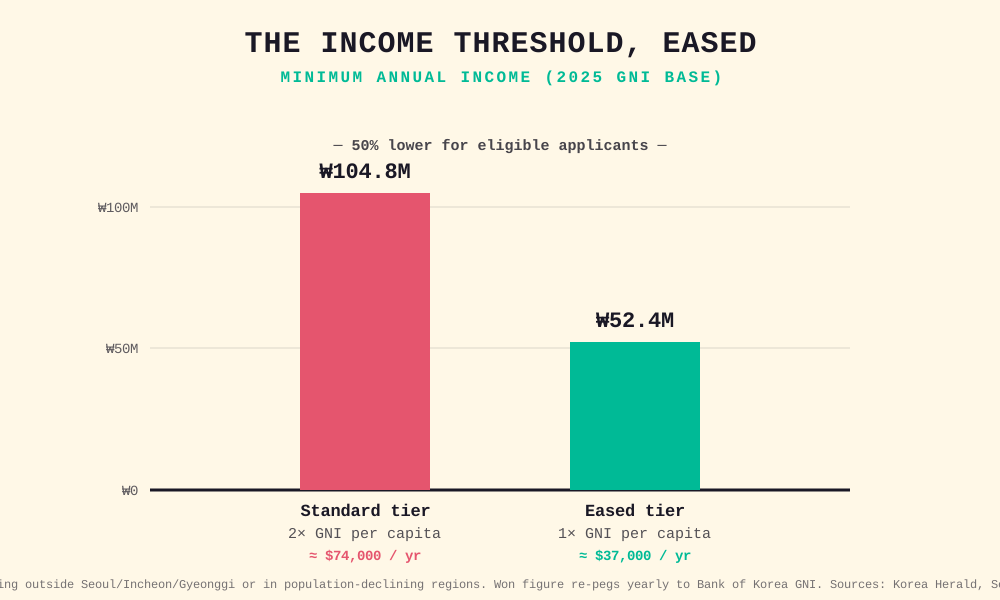
This is the change worth reading twice. Korea sets the bar as a multiple of its GNI (gross national income) per capita, which the Bank of Korea publishes yearly. The 2025 GNI per capita was ₩52.41 million (about $36,963) (Korea Herald).
Under the pilot, essentially everyone needed 2× GNI. Under the permanent program, the requirement now slides between 1× and 2× depending on your age and where you settle:
| Your profile | Income multiple | Approx. won (2025 base) | Approx. USD |
|---|---|---|---|
| Standard applicant | 2× GNI | ₩104.8 million | ~$74,000 |
| Ages 18–34 or outside Seoul / Incheon / Gyeonggi | 1×–2× GNI | between ₩52.4M and ₩104.8M | ask immigration |
| Ages 18–34 and outside Seoul / Incheon / Gyeonggi | 1× GNI | ₩52.4 million | ~$37,000 |
| Population-declining regions (인구감소지역) | Reduced | Varies | — |
Read the conditions carefully, because most English coverage gets this wrong. The Ministry of Justice applies the eased requirement to applicants aged 18–34 or living in a non-capital or population-declining region — the two are joined by "or", not "and". Its worked example of the full 1× rate is someone who is both 18–34 and outside the capital region (Seoul Economic Daily). Intermediate cases are assessed on a sliding scale, and the full tier table has not yet been published in English — so run your exact number past a Korean immigration office or HiKorea.
One thing to note: the won figure moves every year because it re-pegs to the prior year's GNI. Budget against the multiple (1× or 2×), not a fixed dollar amount.
How long can you stay in Korea on the digital nomad visa?
The F-1-D grants a one-year sojourn period, and the visa is valid for one year from your entry date. You extend it at the immigration office, and under the permanent program the total stay was raised from two years to three (Korea Herald). That extra year matters: three years is long enough to build a real life in a Korean neighborhood rather than treating the country as a long layover.
How do you apply for the F-1-D visa?
You can apply from abroad at a Korean embassy or consulate, or — in many cases — change your status from short-term status (B-1 visa-free, B-2 tourist, or C-3 short-term) at a local immigration office without leaving Korea. Processing runs about 3–4 weeks with no expedited option.
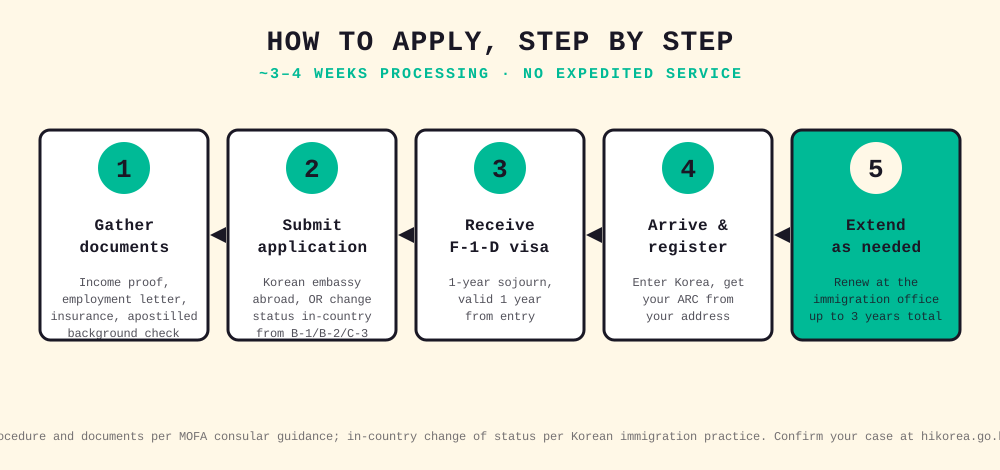
What you need before you start:
- Employment verification — a letter from your foreign employer (issued within the last two weeks) confirming your role and remote arrangement.
- Income proof — recent pay stubs, three months of bank statements, and tax returns showing you clear the threshold.
- Criminal background check — apostilled, and typically valid for six months.
- Health insurance documentation — a policy covering medical treatment and repatriation for the full stay.
- Passport and photos.
Common pitfall: the background-check apostille and the employer letter both have short validity windows. Gather them last, right before you file, so they don't expire mid-application.
Once you land, you register for your ARC (외국인등록증, Alien Registration Card) from your Korean address — the ID that unlocks a phone plan, a bank account, and a proper lease. We walk through that in How to Get Your Korean ARC.
Can your family come with you?
Yes. A spouse and minor children can accompany the main F-1-D holder as dependents, with proof of the family relationship. This is one of the quieter but more meaningful features — it turns the visa from a solo experiment into something a couple or a young family can actually plan around for up to three years.
What can't you do on this visa — and what about taxes?
The hard line is no local work: you cannot take Korean employment or run a profit-making operation inside Korea. The visa assumes your paycheck arrives from abroad. On taxes, long stays can trigger tax-residency questions in Korea and in your home country — this guide is not tax advice, and anyone staying multiple years should get a cross-border tax opinion before assuming their situation is simple.
Where should digital nomads actually live in Korea?
Here's the part the visa rules quietly push you toward. The eased 1× income tier rewards living outside the Greater Seoul area — that's the whole point of tying it to population-declining regions. If you're 18–34, choosing Busan, Daejeon, Gwangju, or a smaller regional city can literally halve the income you need to qualify.
Wherever you land, the housing math is the same problem every foreigner hits: traditional Korean leases (월세 / wolse, and especially 전세 / jeonse) expect a large deposit, a Korean guarantor, an ARC, and a local bank account — none of which you have on day one. That mismatch is exactly why co-living tends to fit remote workers:
| Housing route | Deposit | Needs ARC / guarantor | Lease length | Fit for a nomad |
|---|---|---|---|---|
| Direct wolse lease (officetel / 오피스텔) | ₩5–20M | Usually yes | 12–24 months | Hard on arrival |
| Jeonse (전세) | Tens of millions+ | Yes | 24 months | Not realistic |
| Co-living / furnished monthly | Low | No | Flexible, monthly | Strong |
Because the visa bans local employment, you're here to live, not commute to a Korean office — so neighborhood flexibility beats a long lease near a workplace you don't have. For the no-key-money, ARC-free version of the story, see Renting in Seoul Without Korean, Without an ARC, Without a Guarantor, and for how visa type shapes housing across real tenants, read Six Visas, Six Co-living Stories. If a working-holiday route is also on your radar, our Working Holiday in Korea guide covers the adjacent visa-and-life playbook.
Thinking about a workation year in Korea? Shared Homies runs furnished, deposit-light co-living rooms you can reserve from abroad — no ARC or guarantor needed to move in, and monthly billing that matches a flexible nomad stay. Browse live rooms at /availability and see whether a Seoul (or beyond-Seoul) base fits your plan.
Last reviewed July 9, 2026. Visa rules change — always confirm current requirements with the Korea Immigration Service / HiKorea or your nearest Korean embassy before applying.
Frequently asked questions

F-4 visa holder operating co-living houses in Seoul since 2023. Writes about the practical reality of foreigner housing in Korea — what the friction actually costs, what it takes to live here long-term, and where the rental system trips up newcomers.
We reply within 24 hours · ★ 5.0 on Google Reviews
or browse the houses first →