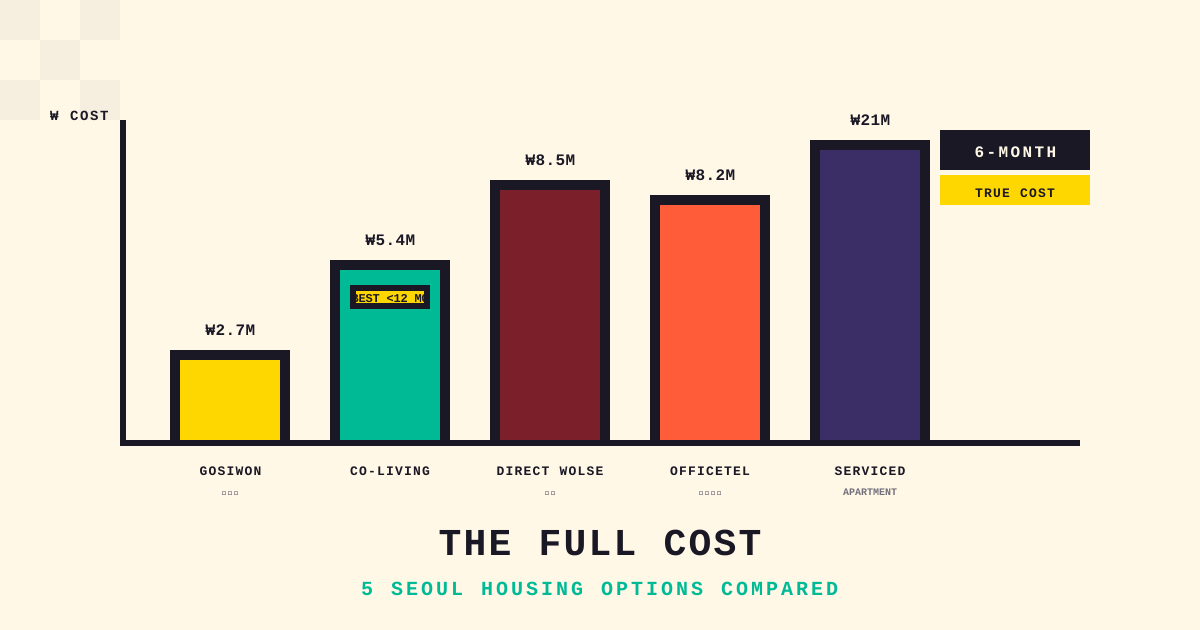
Share House vs Gosiwon in Seoul: Which One is Right for You?

- Gosiwon: ₩300K–550K/month, 4–7㎡ room, shared bath, no ARC documentation, no community.
- Share house: ₩650K–1.4M/month, 10–20㎡ private room, shared kitchen/living room, ARC-ready.
- Gosiwon wins only on price. Share house wins on size, livability, and bureaucratic utility.
- If you need an ARC address — choose a share house. Gosiwon can't provide the paperwork.
- If you're staying under 2 months and cost is everything, gosiwon is fine.
The two options that dominate the budget end of Seoul's foreigner housing market are gosiwon and share houses. Both are cheaper than direct wolse rentals. Both accept foreigners without the full Korean rental paperwork stack. But they serve very different situations, and the wrong choice can mean spending 6 months in a space the size of a walk-in closet or spending twice as much as you need to.
Here's the honest comparison.
The core difference: room size
This is the number that matters before anything else.
A gosiwon room in Seoul is 4–7 square meters. That's roughly the footprint of a large bathroom. It fits a single bed, a small desk, a mini-fridge, and nothing else. The wall and door separate you from a hallway with shared bathrooms. There is almost never natural light. It's functional — you can sleep there, study there, exist there — but it is not comfortable for more than a few weeks.
A share house private room in Seoul is 10–20 square meters — a real room. It fits a proper bed, a wardrobe, a desk, and sometimes a small seating area. Common areas (kitchen, living room, sometimes a rooftop or courtyard) add meaningful livable space. You can host a friend, cook a real meal, and leave the building in the morning without feeling like you crawled out of a storage unit.
If you're staying more than 60 days in Seoul, this size difference matters more than the price difference.
Full cost comparison
| Factor | Gosiwon | Share house / Co-living |
|---|---|---|
| Monthly room | ₩300,000–550,000 | ₩650,000–1,400,000 |
| Utilities | Often extra (₩50K–100K/mo) | Included |
| Internet | Extra (₩30K–50K/mo) | Included |
| Cleaning | Self-managed | Often included (weekly/biweekly) |
| Deposit | ₩100,000–500,000 | ₩200,000–500,000 (low or none) |
| Furnishing needed | No (minimal included) | No (fully furnished) |
| Realistic monthly all-in | ₩380,000–700,000 | ₩650,000–1,400,000 |
The gap narrows when you add utilities and internet to gosiwon. For a 6-month stay, the total cost difference between a budget gosiwon (₩400,000/month all-in) and a budget share house (₩700,000/month all-in) is ₩1,800,000 — about $1,300 USD. That's a real number, and for some travelers it makes the gosiwon the right call. But for most people staying 3+ months, an extra ₩300,000/month for a livable space, a real kitchen, and people to actually talk to is worth it.
The ARC documentation difference
This is the decisive factor for most expats planning a real Korea stay.
To apply for your ARC (Alien Registration Card / 외국인등록증) at the Korean immigration office, you need to prove you have a residential address. The documentation required is either:
- A residential rental contract (임대차계약서) in your name, or
- A Confirmation of Residence (거주/숙소제공 확인서) from your operator, backed by their residential business license
Gosiwon cannot provide either document in most cases. They operate under hospitality (숙박업) business licenses, not residential rental licenses. When you show up to your ARC appointment with a gosiwon booking printout, the immigration officer will typically reject it and ask for a residential contract.
Share houses with residential rental licenses can provide the full packet. A good operator will give you: the signed confirmation form, a copy of their lease or property registration, and a copy of their ID — exactly what immigration needs. Confirm this explicitly before booking.
The ARC unlocks everything downstream in Korea: full Korean bank account, NHIS healthcare enrollment, postpaid SIM, direct rental eligibility. If you don't have it, you're operating in a constrained mode for your entire stay. For most expats planning to be in Korea more than 90 days, the ARC isn't optional — which means the housing type that lets you get it isn't optional either.
Who should choose a gosiwon
Gosiwon is the right answer when:
- Your stay is under 60 days and you don't need ARC documentation
- Budget is the absolute constraint and the price gap justifies the size trade-off
- You're between housing situations — moved out of one place, waiting for another to open, need 2 weeks of somewhere to sleep
- You travel frequently and are rarely home — gosiwon as a base you actually sleep in vs live in
It is not the right answer for an expat planning to live in Seoul for 6–18 months who needs an ARC, a social life, and a kitchen they can actually cook in.
Who should choose a share house
Share house / co-living is the right answer when:
- You're staying 1–18 months and want a real room
- You need ARC documentation — this alone is decisive for most expats
- You're relocating from abroad and want English-speaking management, video walkthroughs, and a community of other internationals on arrival
- You're an exchange or international student who needs address proof for university enrollment
- You want a community — meals in the kitchen, people to ask about neighborhoods, other expats who've solved the same bureaucratic problems you're about to face
The practical checklist before booking either
For gosiwon:
- Are utilities included or extra?
- Is there internet included or do you need a separate contract?
- What are the bathroom arrangements (shared per floor or per room)?
- Does the room have a window?
- What's the minimum stay?
For share houses:
- Does the operator provide ARC-ready address documentation? (Ask explicitly)
- Is it all-inclusive (utilities, Wi-Fi, cleaning)?
- What's the minimum stay? What's the notice period?
- Can you do a video walkthrough before booking?
- How many people share the kitchen and bathrooms?
For more context on how share houses compare to direct apartments, gosiwon, and other Seoul housing types over 6 and 12-month timelines, see the full Seoul housing cost breakdown.
SharedHomies operates share houses in Seoul's central expat neighborhoods — Haebangchon, Hongjae, Muakjae, and Kyunglidan. Private furnished rooms, all-inclusive pricing, ARC documentation provided, English support throughout. See available rooms.
Frequently asked questions

F-4 visa holder operating co-living houses in Seoul since 2023. Writes about the practical reality of foreigner housing in Korea — what the friction actually costs, what it takes to live here long-term, and where the rental system trips up newcomers.
Related reading
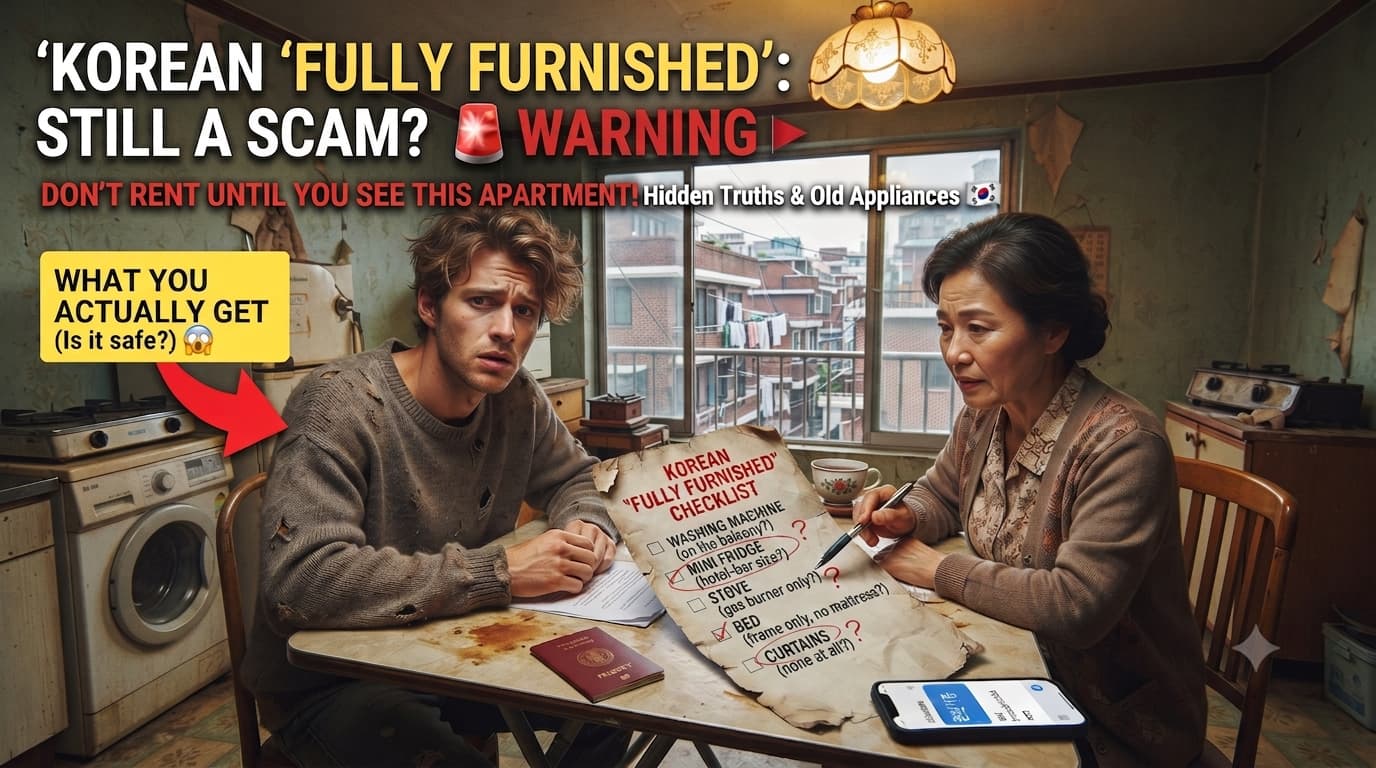
What \"Fully Furnished\" Actually Means in Korea — 풀옵션, Category by Category
In Korean listings, \"fully furnished\" (풀옵션) can mean a fridge and a washing machine — or a genuine turnkey home. Here's the category-by-category breakdown, what each tier usually includes, and what filling the gaps costs.
5 min read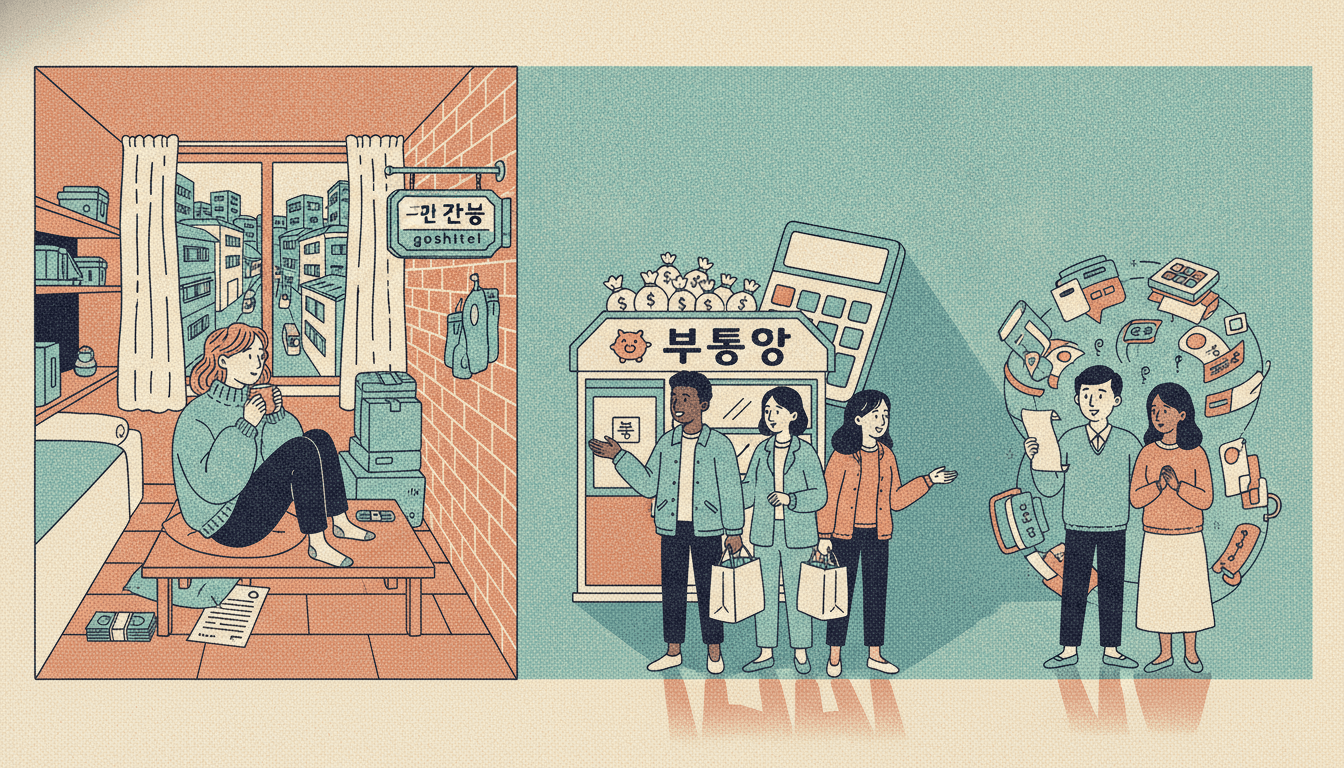
The Hidden Tax of DIY Rentals in Seoul: The Full Cost Foreigners Actually Pay
The rent on a direct Seoul lease is the visible half of the bill. Here's the full accounting — deposit opportunity cost, furnishing, contracts, utility setup, and 20–40 hours of Korean-language bureaucracy — with the numbers side by side.
5 min read
Korean Lease Contract Red Flags Every Foreigner Should Know — With Example Clauses
Nine red flags in Korean rental contracts that cost foreigners deposits: mismatched owner names, banned move-in reports, blanket repair clauses, and the special terms (특약) that quietly override everything — with the actual contract language to watch for.
6 min read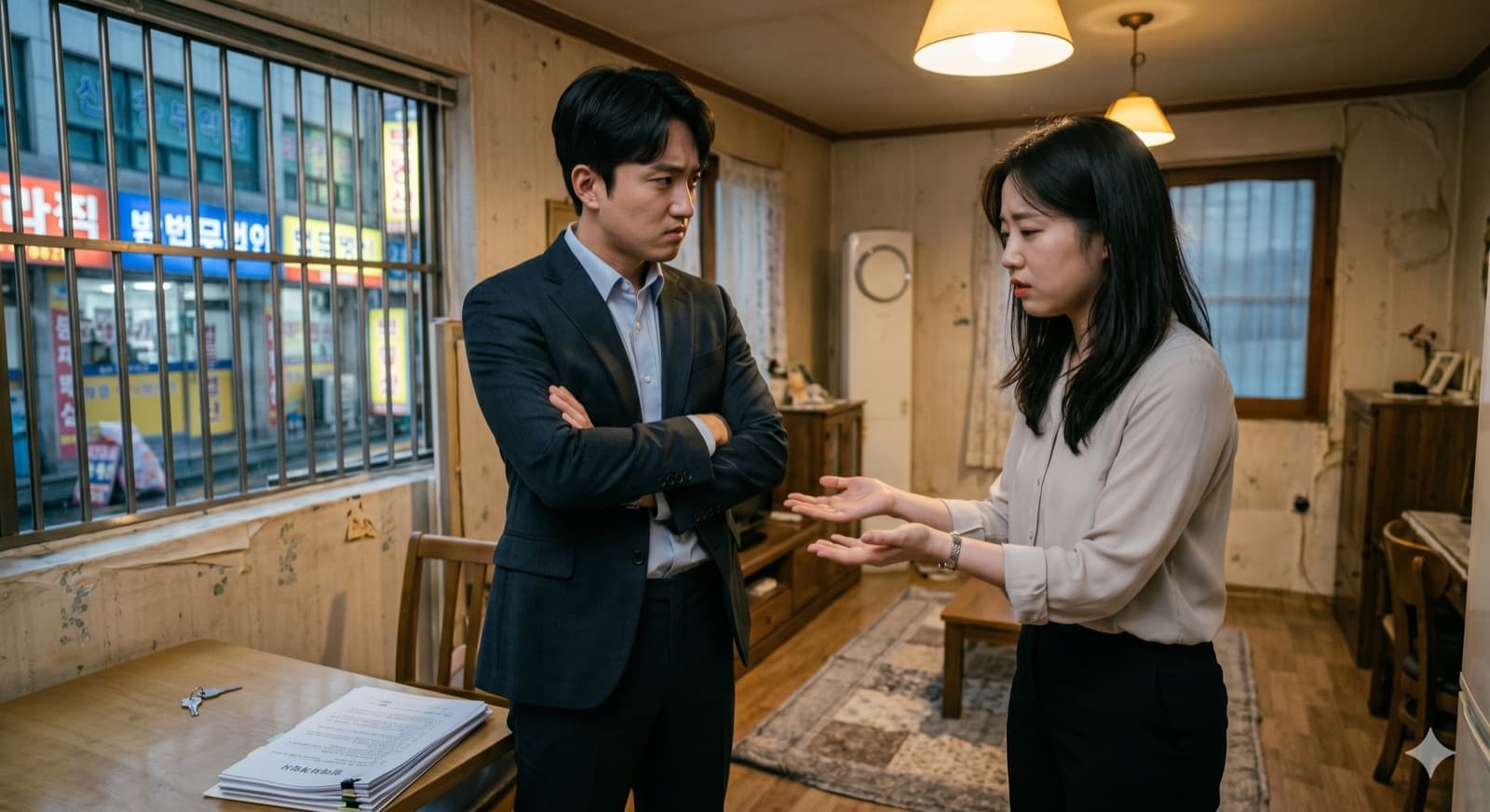
How to Get Your Rental Deposit Back in Korea (Even If the Landlord Won't Pay)
Korean deposits are refundable by law — but the law only works if you follow the sequence: written notice, documented handover, certified letter, lease registration order, then mediation or court. Here's the full playbook for foreigners.
6 min read