
Comment trouver un emploi en Corée sans parler coréen (guide 2026)

- 2,72 millions d'étrangers vivent désormais en Corée (5,2 % de la population) — le marché de l'emploi pour eux est réel mais étroit.
- La plupart des emplois coréens nécessitent le coréen — mais il existe un vrai sous-ensemble qui ne le demande pas, et le chemin pour y accéder est précis.
- L'enseignement de l'anglais (hagwon, EPIK, université) est la porte la plus large — pas de coréen requis, parrainage de visa courant.
- Les startups tech coréennes avec des équipes internationales sont l'option à plus fort potentiel pour les développeurs, designers et chefs de produit.
- Dev Korea, The Garrison et LinkedIn Korea sont les trois plateformes qui valent votre temps. Saramin ne l'est pas.
- Pendant votre recherche, le visa D-10 chercheur d'emploi vous donne 6 mois légaux. Le visa nomade numérique F-1-D en donne 1 à 2 ans si vous gagnez déjà à distance.
Je l'entends sans cesse de la part de mes locataires. Ils arrivent avec un visa vacances-travail, tombent amoureux de Séoul, terminent leur année — puis réalisent qu'ils n'ont aucune idée de comment rester légalement et gagner leur vie ici.
Ils ne sont pas seuls. En novembre 2024, 2,72 millions de ressortissants étrangers vivent en Corée — 5,2 % de la population totale, en hausse de 6,3 % par rapport à l'année précédente (Korea Herald, 2024). Près de 57 % d'entre eux sont concentrés dans la grande région de Séoul. La ville abrite une immense communauté d'étrangers qui essaient de comprendre exactement ce que vous êtes en train de comprendre.
D'abord la vérité brutale : 90 % des offres d'emploi en Corée exigent la maîtrise du coréen. Si vous ouvrez Saramin, Jobkorea ou Naver Jobs, la plupart de ce que vous trouverez demande du 비즈니스 한국어 (coréen de niveau professionnel). C'est simplement la réalité.
Mais il existe un vrai 10 % qui ne l'exige pas — et si vous vous y prenez en sachant où chercher et ce pour quoi vous êtes réellement en concurrence, le chemin est bien plus clair qu'il n'y paraît.
Qui reste vraiment — et pourquoi l'emploi est le goulot d'étranglement
 Les rues de Séoul — 2,72 millions de résidents étrangers, et ce n'est pas fini.
La population d'étudiants internationaux en Corée a atteint 208 962 personnes en 2024, le gouvernement visant les 300 000 d'ici 2027 (KOSTAT, 2024). Parmi ces étudiants, 65,5 % disent vouloir rester en Corée après l'obtention de leur diplôme — et 36,2 % citent l'emploi comme raison principale de rester.
L'écart entre « vouloir rester » et « savoir comment rester en situation d'emploi légale » est là où la plupart des gens se retrouvent bloqués. La main-d'œuvre étrangère totale de la Corée était mesurée à 929 000 personnes en 2018 (3,3 % de la population active) par l'Organisation internationale du travail (OIT, 2024) — et a considérablement augmenté depuis. La classe professionnelle de ce groupe — le segment de l'enseignement de l'anglais, de la tech et des entreprises auquel appartiennent la plupart de mes locataires — est une tranche bien plus petite avec sa propre stratégie.
Le rapport 2024 de l'OCDE sur les migrations en Corée a constaté qu'en 2022 seulement, la Corée a délivré 160 000 permis de travail temporaires et saisonniers et 57 000 permis à des étudiants internationaux de l'enseignement supérieur (Perspectives des migrations internationales 2024 de l'OCDE). Le pipeline existe. Trouver la bonne porte d'entrée, voilà le problème.
La carte honnête des emplois ouverts à l'anglais en Corée
1. L'enseignement de l'anglais — la porte la plus large
C'est toujours le point d'entrée le plus accessible pour les étrangers sans coréen. Trois grands formats :
EPIK (English Program in Korea) place des anglophones natifs dans les écoles publiques à travers tout le pays. Salaire : 1,8 à 2,7 M₩/mois selon l'expérience, plus une allocation logement, les vols et l'assurance maladie. Le visa E-2 est parrainé directement par l'école. Les candidatures ouvrent deux fois par an pour les rentrées de mars et de septembre. Vous n'avez pas besoin d'expérience d'enseignement — un diplôme et un casier judiciaire vierge sont les principales exigences.
L'enseignement en hagwon privé (학원) offre un plafond salarial plus élevé (2,2 à 3,5 M₩+ dans les académies de conversation haut de gamme) mais pas de subvention au logement, et les contrats varient beaucoup. Le visa E-2 reste parrainé par l'employeur. Les conditions de travail sont moins encadrées qu'à l'EPIK — vérifiez les contrats sur Hagwon Blacklist et Dave's ESL Cafe avant de signer.
L'enseignement de l'anglais au niveau universitaire est le format le plus confortable — calendrier semestriel, environnement professionnel, plus d'autonomie. Plus difficile à décrocher sans master ou expérience préalable d'enseignement universitaire, mais à viser si vous avez l'un ou l'autre.
2. Les entreprises à capitaux étrangers et les filiales internationales
De nombreuses multinationales exploitent des bureaux à Séoul fonctionnant entièrement en anglais — en particulier dans la finance, le conseil, l'industrie et la tech. Google Korea, Amazon Korea, Meta Korea, Siemens, BASF, Deloitte et de grands cabinets d'avocats internationaux ont tous des opérations à Séoul avec des équipes anglophones.
Ces postes sont compétitifs précisément parce qu'ils n'exigent pas le coréen — vous êtes en concurrence avec des Coréens qui parlent anglais et des expatriés expérimentés. Mais ils sont réels, et ils sont publiés sur les mêmes canaux que leurs équivalents mondiaux.
3. Les startups tech et les studios de jeux coréens
 L'écosystème de startups de la Corée figure dans le top 20 mondial — et il recrute activement des anglophones.
C'est l'option à plus fort potentiel pour les développeurs, designers, chefs de produit et data scientists.
L'écosystème de startups de la Corée est plus grand que la plupart des étrangers ne l'imaginent. Les investissements en capital-risque en Corée du Sud ont augmenté de 9,5 % sur un an en 2024, atteignant 8,95 milliards de dollars (KoreaTechDesk, 2024). La demande d'emplois dans la tech devrait croître de 12 % en 2024, avec les plus grands déficits dans l'IA, la cybersécurité et le cloud computing. Des entreprises comme Coupang (l'Amazon coréen), Krafton (PUBG), NCSoft, Kakao et Toss ont grandi à l'international — et des dizaines de startups financées par du capital-risque derrière elles construisent pour les marchés mondiaux.
Les entreprises avec des investisseurs internationaux ou une portée de produit mondiale recrutent de plus en plus des ingénieurs seniors qui ne parlent qu'anglais, car l'alternative serait de perdre ces candidats au profit de marchés américains mieux rémunérés. Le vivier cible réaliste : les postes de niveau intermédiaire à senior dans des entreprises à financement international. Les postes juniors dans ces entreprises ont encore tendance à revenir à des candidats coréens. Si vous êtes en début de carrière, l'enseignement de l'anglais ou le travail à distance est le choix le plus viable à court terme.
4. Le travail à distance pour un employeur étranger
Si vous avez déjà un emploi à distance — ou pouvez en décrocher un — vous pouvez vivre légalement en Corée avec le visa nomade numérique F-1-D tout en conservant votre revenu actuel. Le F-1-D exige un revenu annuel de 84 M₩+ (~66 000 USD) provenant d'un employeur non coréen, introduit en 2024. C'est une véritable option « gagner du temps et de la stabilité » pour les travailleurs à distance seniors — vivre à Séoul, chercher des postes coréens en parallèle, et convertir en E-7 si vous décrochez quelque chose.
Les plateformes qui fonctionnent vraiment
Dev Korea — la communauté des développeurs étrangers à Séoul
Dev Korea se présente comme « la plateforme d'emploi tech n°1 pour les anglophones en Corée » — et pour les développeurs, elle le mérite. Elle est conçue spécifiquement pour les ingénieurs et designers étrangers à Séoul : rencontres régulières, un tableau d'offres organisé avec des entreprises coréennes ouvertes à l'anglais, et des mises en relation directes entre membres et responsables du recrutement qu'aucun site d'emploi ne peut reproduire.
La vraie valeur n'est pas les offres — c'est l'intelligence collective. Les membres partagent quelles entreprises ont réellement des équipes fonctionnant en anglais et lesquelles prétendent en avoir mais attendent du coréen au quotidien. Cette vérité de terrain est difficile à obtenir ailleurs.
Si vous êtes développeur à Séoul, assistez à une rencontre Dev Korea avant de postuler où que ce soit. Une conversation là-bas vaut vingt candidatures à froid sur LinkedIn.
The Garrison — le réseau professionnel des expatriés
The Garrison est une communauté professionnelle organisée pour les étrangers qui construisent leur carrière en Corée. Finance, conseil, développement commercial, marketing et opérations : tous l'utilisent aux côtés des développeurs. Elle organise des événements de networking, propose des mises en relation entre membres et publie des pistes d'emploi d'entreprises basées en Corée qui recrutent activement à l'international.
Elle couvre le spectre des professionnels expatriés que Dev Korea ne couvre pas — si vous n'êtes pas ingénieur, commencez ici.
LinkedIn Korea — utile avec du filtrage
LinkedIn fonctionne pour la recherche d'emploi en Corée, mais vous devez filtrer agressivement. Cherchez par nom d'entreprise une fois que vous avez identifié des cibles ouvertes à l'anglais (via Dev Korea ou The Garrison), plutôt que par intitulé de poste — la plupart des recherches par intitulé font remonter des offres exigeant le coréen.
Conseils :
- Activez « Ouvert aux opportunités » avec la localisation réglée spécifiquement sur Séoul
- Suivez les entreprises coréennes que vous visez et surveillez directement leur activité de publication
- Rejoignez des groupes LinkedIn pour professionnels expatriés en Corée — les pistes d'emploi y remontent plus vite que les alertes des sites d'emploi
Startup Korea — l'intelligence de l'écosystème
Startup Korea n'est pas un site d'emploi mais est utile pour la recherche : quelles startups viennent de lever des fonds (= recrutement), quelles cohortes d'accélérateurs sont actives, quels événements valent la peine d'être suivis pour rencontrer des fondateurs. Utilisez-le pour construire votre liste d'entreprises cibles, pas pour postuler.
Ce qu'il faut éviter
Saramin, Jobkorea, Naver Jobs — la grande majorité des offres exigent le coréen. Le rapport signal/bruit pour les étrangers ne maîtrisant pas le coréen est très faible. Ne lancez pas votre recherche ici.
Régler votre visa pendant que vous cherchez
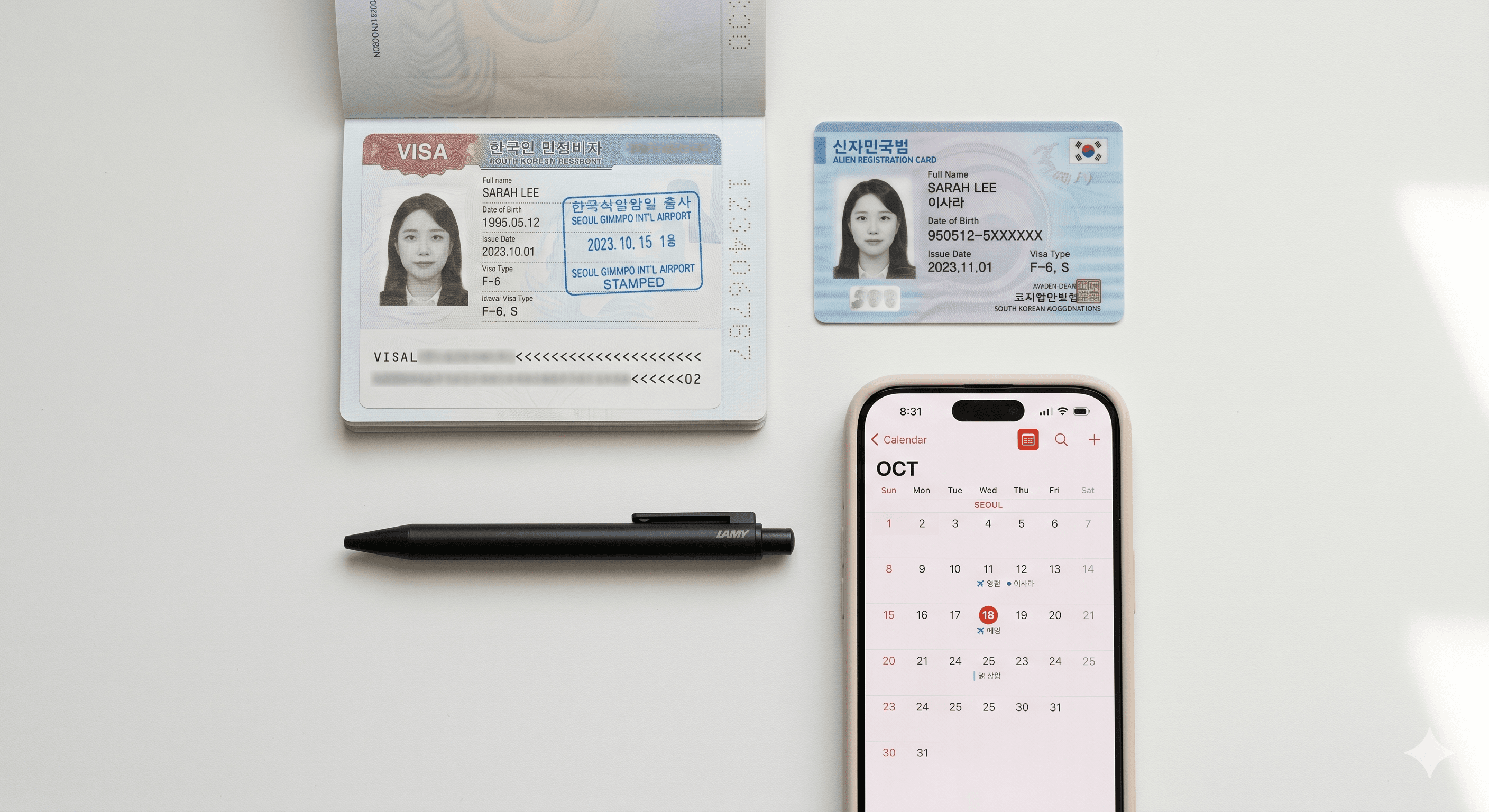 Votre situation de visa conditionne tout le reste — réglez-la avant de commencer à postuler.
C'est la partie que la plupart des gens comprennent trop tard.
Si vous êtes en vacances-travail (H-1) : votre visa expire au bout de 12 mois, sans prolongation. Si vous décrochez une offre d'emploi E-7 avant l'expiration, vous convertissez dans le pays ou via un déplacement au consulat au Japon ou à Hong Kong. Pas d'offre à l'expiration = vous quittez la Corée et revenez avec un visa différent.
Le visa D-10 chercheur d'emploi vous offre 6 mois de séjour légal en Corée pendant que vous cherchez activement. Il exige un diplôme et des preuves d'une recherche d'emploi active (candidatures, inscription auprès de recruteurs, comptes rendus d'entretiens). Il ne vous autorise PAS à travailler — juste à rester légalement et à chercher. Renouvelable une fois pour 6 mois supplémentaires. Faites la demande auprès de votre bureau d'immigration local.
Le visa nomade numérique F-1-D est la voie la plus nette si vous avez déjà un revenu à distance étranger ≥ 84 M₩ (~66 000 USD). Un à deux ans de résidence légale, l'ouverture de comptes bancaires, l'accès à la NHIS. Cherchez des postes coréens en parallèle et convertissez en E-7 si vous décrochez quelque chose.
Si vous êtes en D-2 ou D-4 (programme étudiant/linguistique) : le travail à temps partiel (20 heures/semaine maximum) est autorisé avec un permis de travail à temps partiel délivré par l'immigration. Certains de mes locataires l'utilisent pour acquérir de l'expérience en enseignement de l'anglais ou en création de contenu pendant qu'ils sont sous visa étudiant — une voie légitime vers un E-2 ou E-7 complet plus tard.
La séquence pratique pour les jeunes diplômés
La plupart de mes locataires ont 23 à 27 ans, viennent de terminer un diplôme et sont en Corée depuis 6 à 12 mois sous visa vacances-travail ou étudiant. Voici la séquence qui fonctionne vraiment :
- Sécurisez d'abord un logement stable. Une chambre calme, un Wi-Fi fiable et une adresse prête pour l'ARC. On ne passe pas de bons entretiens depuis une guesthouse ou un gosiwon aux murs en papier.
- Commencez par l'enseignement de l'anglais pour bâtir un revenu et un statut légal. Hagwon ou EPIK. Ce n'est pas votre carrière — c'est votre passerelle.
- Assistez aux rencontres Dev Korea et aux événements The Garrison. Construisez le réseau avant d'en avoir besoin.
- Demandez le D-10 à l'approche de l'expiration de votre vacances-travail si vous n'avez pas encore d'offre — il vous donne 6 mois de plus sans partir.
- Convertissez en E-7 une fois que vous avez une offre d'emploi d'une entreprise coréenne au cadre de travail anglophone.
Ceux qui y arrivent ne sont pas forcément les meilleurs en coréen ni les plus qualifiés sur le papier. Ce sont ceux qui stabilisent d'abord le logement et le revenu, puis jouent la carrière sur le long terme.
Sources
- Korea Herald — Les résidents étrangers en Corée du Sud dépassent les 2,8 M (2024)
- KOSTAT — Enquête 2024 sur les conditions de vie et la population active des immigrés
- OCDE — Perspectives des migrations internationales 2024 : Corée
- OIT — Mesurer la migration internationale de main-d'œuvre en République de Corée (2024)
- KoreaTechDesk — La Corée attire les talents mondiaux, mais le recrutement suit encore un chemin étroit
Steve Wagner est le fondateur de Shared Homies, un opérateur de co-living à Séoul. Il vit et travaille en Corée depuis 2016. Des questions sur la recherche d'emploi en Corée ? Demandez-lui via WhatsApp — il répond directement.
Questions fréquentes

F-4 visa holder operating co-living houses in Seoul since 2023. Writes about the practical reality of foreigner housing in Korea — what the friction actually costs, what it takes to live here long-term, and where the rental system trips up newcomers.
Réponse sous 24 heures · ★ 5,0 sur Google Reviews
ou parcourez d'abord les maisons →À lire ensuite

Working Holiday Accommodation Seoul: A 2026 Guide for Foreigners in Korea
A step-by-step 2026 housing playbook for H-1 working holiday makers in Seoul: budgets, neighborhoods, contracts, and how to book before you land.
10 min de lecture
Working Holiday in Korea: A 2026 Guide for Foreigners
A step-by-step 2026 guide to the H-1 working holiday visa in Korea: eligibility, application, arrival setup, housing, and job hunting.
6 min de lecture
Working Holiday in Korea vs Japan: Which Should Be Your Asia Home Base? (2026)
Korea and Japan both offer working holiday visas for ages 18–30 — 12 months standard, and Korea grants some nationalities up to 24. Japan's program is bigger and more open; Korea is cheaper, easier to base yourself in, and a better launchpad for the rest of Asia. Here's the honest, numbers-first comparison.
8 min de lecture